I suppose there's only one way to end my year-long hiatus from blogging: jump right in and throw in lots of pictures.
Right now I'm in the picturesque and bustling capital of Vanuatu, Port Vila. I've been enjoying the modern amenities for the past week while scrambling to get around town and find all of the pipe and other materials for our water and sanitation project back on Maewo.
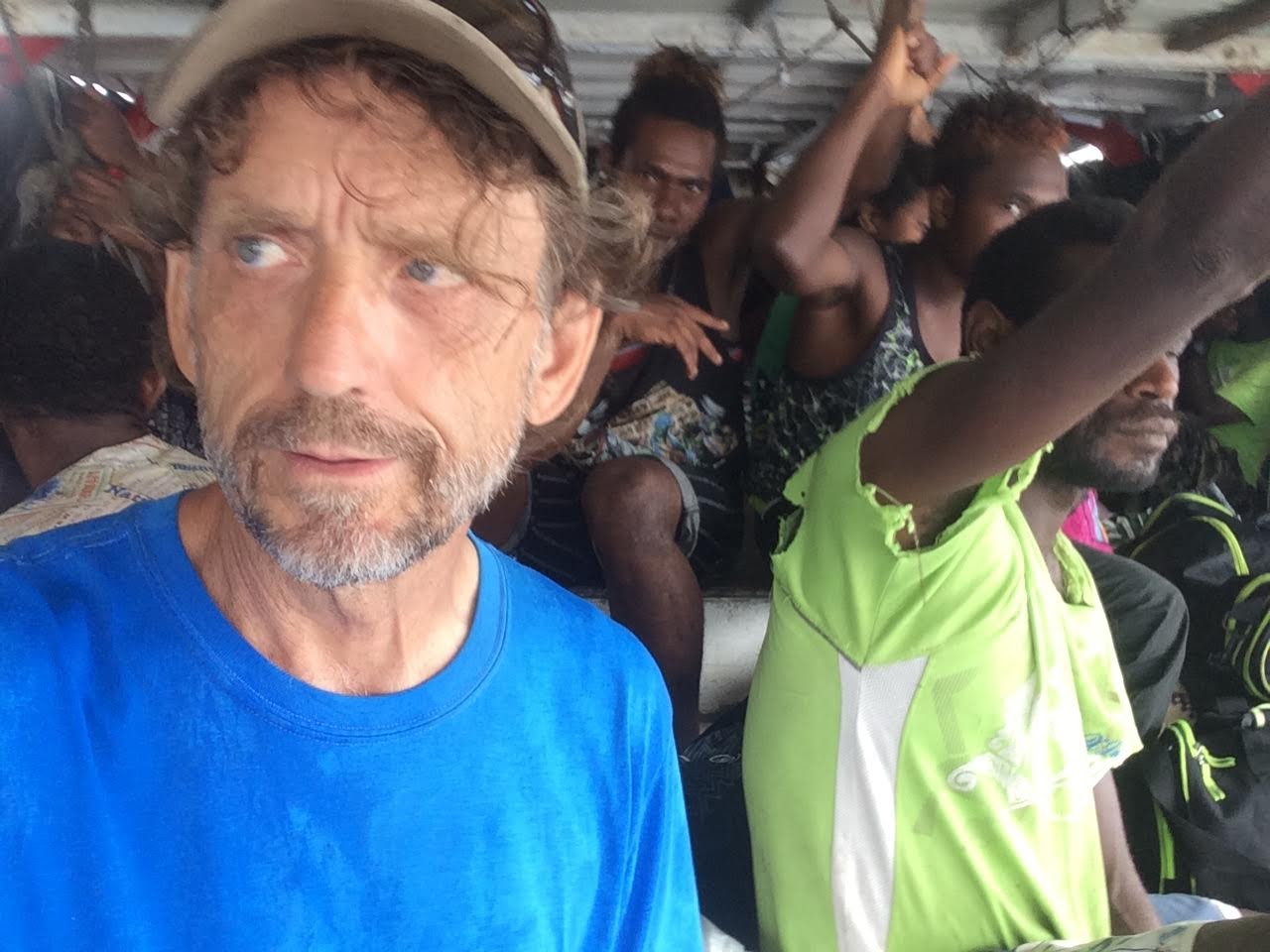
I just hopped on one of those mini-buses coming back from the chaotic scene at Star Wharf, where I joined the throng to get one last tow sack full of pipe fittings onto a ship, along with another sack full of groceries to hold me over for the next three months before I leave Maewo again.
With everything on board and the freight paid for I can finally relax, thankful that I'm flying home to Maewo tomorrow and not accompanying my things up through the archipelago on the ship like many locals do. It would be a much cheaper option, but there are no actual accommodations on these freighters-- passengers just have to post up wherever they can, and my limited experience on local ships tell me that the three-day transit would be absolutely brutal.
It's exciting to be at this stage of the project. Since the last time I posted to this blog we've come a long way towards getting clean water piped into most neighborhoods of the community. We made initial repairs and upgrades to the pipelines and added branch lines that have gotten water flowing into previously under-served parts of town.
I've even gotten a tap at my own house--a big upgrade from the long-serving tippy-tap that I had set up when I moved in.
Most families can now get safe, clean water from a public tap that's within a short walk from their homes, but at peak-demand hours some of the taps still tend to go dry. The big-ticket item of the new project is a half mile of 50 mm HDPE pipe that we will use to replace the smaller gauge pipe that currently makes up the mainline. We'll be taking out the smaller pipe and reusing it to upgrade two smaller water systems and to tap a new water source for a small neighborhood up in the bush above Marino where my good friend Richard lives. When we went up to survey that line last week he and his wife were in their kitchen making a manioc naolat. So delicious!
These upgrades to the pipelines are going to increase the flow of water exponentially and that will make it possible for the community to take a dramatic step forward in household water access. As I mentioned, families now carry water in buckets from the nearest public tap stand to their kitchens. They dip into those buckets for drinking, cooking and washing their hands, and although the water at the tap is pure spring water, the likelihood of subsequent contamination is obvious.
In almost every kitchen you find several big round pans fashioned from the heavy plastic floats that break loose from commercial fishing nets and wash up onto the eastern coast of the island. When cut in two, these floats become all purpose vessels for washing hands and dishes, filled with water in the morning and dumped out in the evening.
It occurred to me to use one of these floats as the mold to make my own vessel sink using a sand and cement mortar, but also integrating a drain of PE pipe that can run to a soak-away pit outside.
I ran a small branch line around the house and installed an inexpensive tap I'd brought from Port Vila. The prototype turned out even better than I'd expected and has been well-received by everyone whose come by the house to see it.
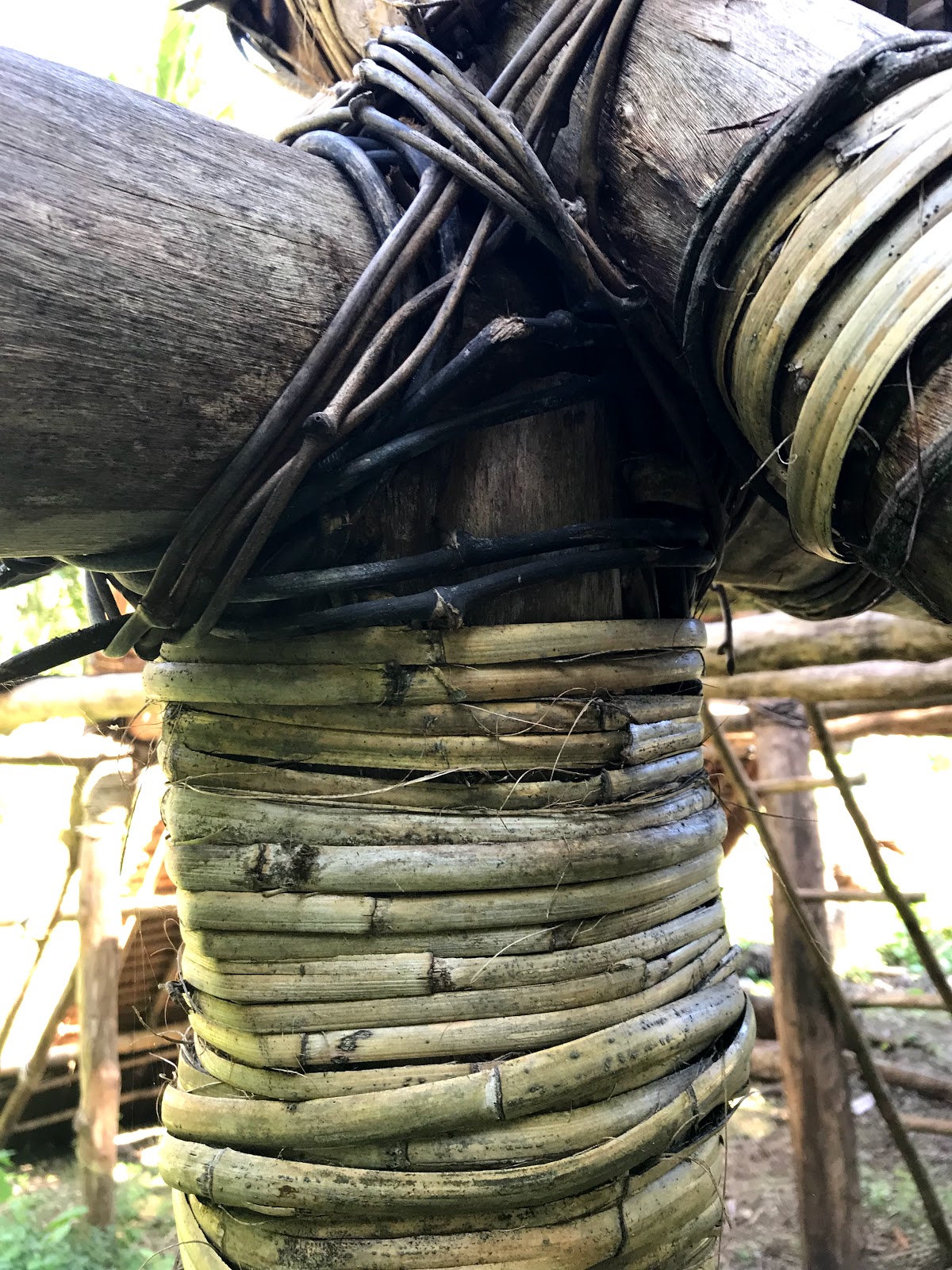
I learned an important lesson in Panama: if you hope to influence people to change their behavior around hygiene, it's best to find innovations that closely match what people are already used to. And if the innovation is something that people can replicate themselves without too many imported components, that's all the better. Folks on Maewo are very proud of the ingenious ways they have adapted to their rugged island. As you might notice in the photos,virtually everything they use to build their homes comes from the bush, not from a hardware store back in the capital. That goes for even the massive community lodge, the Nakamal.
Even when it comes to local entertainment, the essential instrument that plays the signature opening riff of every song by the local "string band" combos is always a home-made ukelele.
So the reaction to a sink that we can make out here ourselves with just a little imported cement has been universally enthusiastic. Same goes for the shower that I worked up from scrap poly pipe using variations on the thermoforming techniques I learned as a volunteer in Panama.
The third element of the household plumbing systems that we are introducing is the one that has been the biggest technical challenge--a water-seal toilet that will be an alternative to the pit latrines currently in use here. Again following the local norms, we're developing a squatting style toilet.
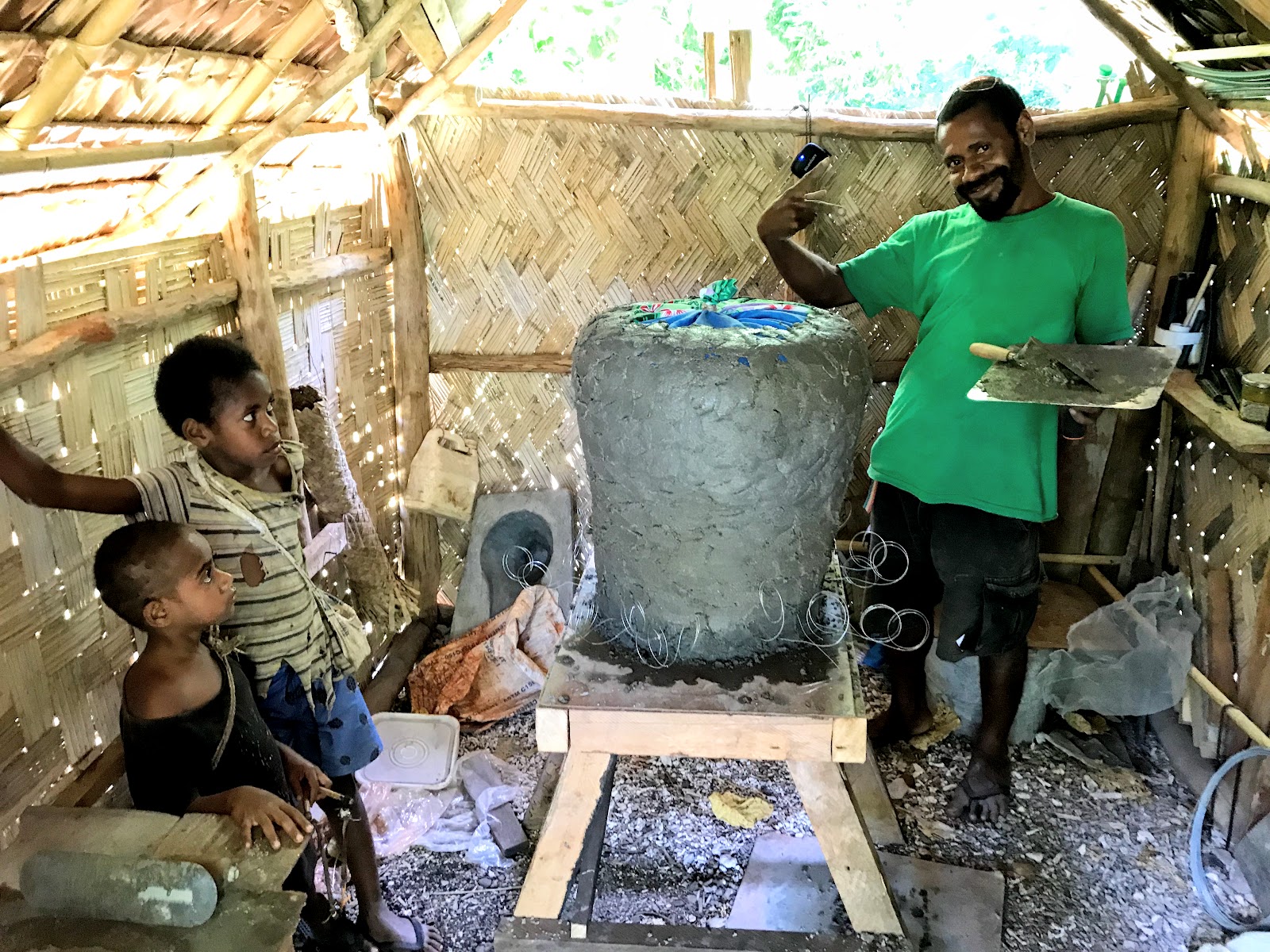
The cement squatting pan shown above will be set into a slab and then it can be flushed into the pit below by simply pouring a pail of water into it.
And continuing on the theme of self-reliance, we'll be building these 70 liter ferrocement tanks to store water beside the toilet for flushing as part of the toilet package the project will be offering families. Households will make a cash contribution to cover the cost of the taps and pipe fittings and provide labor for the installations. I've already started working with some eager local craftsmen on building all of these things and the results have been terrific.
This post is already running too long, but for any readers who are interested in the technical aspects of these toilets, stay tuned. Now that I have working laptop again I plan to write up a detailed post about how to build your own pour-flush toilets sometime soon. And for everyone who's read this far, you might enjoy a little taste of the string band music that sometimes fires up out on the islands when the sun goes down. Check out the sweet sound of that ukelele.
Thanks to everyone who got the chance to contribute to the grant and thanks to all of you for the moral support. Signing off for now from Port Vila in the old New Hebrides.
Relaxing in the hammock after a long day of pouring latrine slabs
has a familiar and satisfying feel about it, but at the same time it
makes me miss having my old PC buddies nearby to complete the
picture. And rum—that's missing too. Strangely, this tropical
country grows a lot of sugar cane but doesn't produce rum. There's
imported scotch and such in the capital, but I decided to hold off on
bringing a bottle of spirits to site for this first stretch, a
decision I'm vaguely regretting at the moment, though it's really the
first time I've thought about it much. There's always the option of
going out and drinking a shell or two of kava, which I do on a
regular basis, but that's different from kicking back here in the
hammock under the thatch sipping a glass of Havana Club. For one thing, kava tastes exactly like dirt.
I will share more about kava some other time, but I should get to
filling in the bigger picture before I get too far sidetracked on the
topic of intoxicants.
So yeah, Peace Corps Vanuatu is
where it's at! At least, it's where I'm at, and I'm quite happy to be
here. I'm out on the very northern end of the tall, narrow island of Maewo.
We're not far from the island's only
airstrip, in a village of about 45 households that are strung out
along a few kilometers of the island's single gravel road which
parallels the jagged, coral-lined coast.
Just across the road the land rises
steeply as you climb up to a densely forested interior. Up about 150
meters things level out and there are vast coconut plantations and
areas cleared for the gardens where families grow their staple crops
of manioc, yam, banana and taro. The people here have been
extraordinarily welcoming to me and after some shaky moments early on
that had me wondering just what in the world I must have been
thinking to have jumped into Peace Corps all over again, I'm now
getting settled and have started finding my footing, both
figuratively and literally. And nowadays there seems to be more to do
most days than I can find time for, which is a surefire formula for a
contented volunteer.
The reason things have gotten so
demanding here is the disaster on the nearby island of Ambae. When I
walk out of my house it's only a hundred paces down the hill past my
latrine and through some dense bush to where the path opens up onto
the aforementioned coastline. It's a remarkably beautiful spot.
Just a few kilometers across the sea
to the east lies Ambae. On a clear day you can see the gentle slopes
of its Manaro Volcano rising in the island's center and disappearing
into the clouds. But most days the view of the island itself is lost
in a light haze and the only indication that it's still there are the
thick plumes of smoke and ash that form in the sky above the volcano.
Since I arrived here in late June we'd
been hearing the frequent rumbling of the volcano, sounding like
distant thunder, and sometimes ominously accompanied by mild
earthquake tremors. Last month the volcano kicked into a higher gear
and enveloped big swaths of Ambae in ankle-deep ash. When a
subsequent rainstorm caused two ash-choked rivers to overflow, an
entire village that was perched on Manaro's western flank was washed
away in the middle of the night. Luckily, just as with Ngabes, there
seem to be Ni-Vans who never sleep, and the alarm was sounded in time
for people to escape to higher ground with nothing more than their
pajamas where they watched everything they owned slide down the side
of the volcano in a slurry of sulfurous ash and mud. That was enough
for the Vanuatu government and what had been a strongly suggested
evacuation was upgraded to a mandatory order with no exceptions.
Freight ships were marshaled and the several thousand islanders who
had been holding out on Ambae were carried off to other islands. A substantial share of them were brought here to Maewo and they began arriving
in our village by the dump truck full.
That was a month ago now, and our
little town of Marino has now nearly doubled its population with the
arrival of some 200 evacuees. It's been an exciting and busy time to
be here as you might imagine.
I've been pitching in whenever and
wherever I can as we set about building temporary housing for the
arriving families, getting water systems and latrine facilities in
place and so forth. There has been plenty of outside aid coming in
both from the Vanuatu government and international NGO's, but the
hands-on work on the ground is all local.
The orange “Community Disaster
Committee” vests became a hot item, as men set to work with their
bush knives hacking down small timber and bamboo to erect frames for
the tarpaulin tents that make up the improvised neighborhoods and
women and girls pinned panels of thatch for roofs and wove coconut
leaf screens for doors.
We didn't have any decent latrines here
to begin with—just a few crude “bush toilets” and those are
quickly being overwhelmed.
So we've made a big push to get the
pits dug and slabs poured for new "VIP" latrines. Unlike
Panama, the water table here is not so high as to be an issue, but
traditional bush toilets are generally very shallow because once you
dig down through a foot or so of loose volcanic soil you hit solid
layers of coral stone that can only be worried through by chipping
away at it for hours with a heavy iron bar know in Bislama as a
“groopah.”
The other big challenge that's been
occupying a lot of my attention is getting enough clean water to
everyone. When I first arrived here the community was barely getting
by with its aging gravity flow water system which was only working
intermittently. But that's not going to cut it now. The government
dropped off a big 6,000 liter poly tank that we set up in the middle
of town where water flows pretty consistently and that has saved the
day for now, allowing us to store up water from the trickle that runs
overnight.
The big problem comes further down the road
and further down the pipeline where I live. A small village from
Ambae--the the same people I mentioned who escaped in their
pajamas--have settled in a small encampment right across the road
from my house. We're all running very low on water cause the pipeline
has been dry more than it has flowed for more than a week now. I have some theories about what's going on
with the pipeline, but troubleshooting it has not proven easy. I've
been experimenting with washing my clothes in the ocean where I do
all my bathing these days if that gives you any idea of how it's
going. But as I said, the ocean is only a hundred steps away, so I
won't expect much sympathy on that count.
I've been so impressed with how the
people of Marino have welcomed the evacuees— upending their village
and disrupting their lives and to make a place for them. Even more
impressive is the equanimity of the new arrivals as they cope with
abandoning the island that has been home for as many generations as
they can imagine. At this point in seems unlikely they will ever
return.
The children seem to be adapting
to the tumult with surprising ease, finding new friends to play with
homemade toys and bonding over familiar routines like the traditional
group head check.
It's heartening to see but it's still very early in what's
bound to be a seminal chapter in everyone's life and with the rainy
season just now arriving the tarpaulin huts are not the only things
that are going to be put to the test. As for my own unique role here
it feels like the game has changed and the stakes raised in a way I
never anticipated. The more mundane challenges of
volunteer life seem rather pale in this context. Salty laundry and
lack of decent coffee (or rum) don't get much traction or cause much
distraction as I just join in with everyone else as we do our best to get
settled in to our new world.
Here goes: the first post in a new volume for this journal. I'm back as a freshly sworn-in Peace Corps Volunteer, this time in the South Pacific island republic of Vanuatu. If you google it you'll find us out on the Coral Sea, eastward from Australia, but suffice it to say, it's half a world away from the U.S.--and from Panama for that matter. Still, it feels quite familiar to me in many ways--ways that make me glad for having made the decision to seek and accept the invitation to serve here for the next two years.
I've been in country for ten weeks now and just completed pre-service training out on the small Island of Pele, a place of stunning tropical beauty where the local villagers instantly adopted all of us as family. People there live in very humble conditions, but the way they opened there homes and hearts to us was deeply affecting. It humbled me and inspired me to redouble my commitment to give it my all in trying to make a difference during my Peace Corps service here.
We started right in with training in Bislama, the pidgin language that is the lingua franca here in Vanuatu. Among the eighty islands that make up the country, there are over one hundred distinct dialects spoken, so Bislama provides a common language that bridges the many gaps.
We had Bislama class down along the beach every morning and it's been fascinating to study. Thanks to the overlap with English and our excellent local teachers it hasn't been an insurmountable task. Bislama deserves a post on this blog all it's own, but for now I'm happy to report I comfortably passed my pre-swear-in evaluation and am conversing in Bislama with surprising ease.
Our host families also taught us a lot about local traditions like the weaving of mats which play an important role in Vanuatu culture. My host aunty was making this mat for a newly engaged nephew who needed many mats along with a number of pigs to present to his future in-laws as a sort of dowry.
The bananas, fish and root crops that are the basis of the diet here are familiar, but the Ni-van techniques of cooking are quite different from what I was used to in Panama. The very popular laplap is made with grated manioc or taro flavored with coconut milk and layered with cabbage leaf
Everything is wrapped up between banana leaves...
then laid on a bed of coals with hot volcanic stones placed on top to roast it.
In the later weeks of we got to put into practice some of our training--building a pour-flush toilet, doing home-to-home visits for community health surveying and presenting a health workshop to the village mamas.
About half way through training we found out our site assignments and traveled out to visit for a week. I'll be living and working on the island of Maewo (MY-woe) for the next twenty-four months. Right now I'm out of time now because I've got to get some last minute shopping and packing done to be ready to fly out tomorrow morning. I've already put most of my things on a cargo ship to be delivered in a few weeks because the flight is on a tiny eight-seater. So I'll save talking about Maewo for now, except to explain the title of this blog post. The names Vanuatu's provinces are derived from the first letters of the names of their principal islands. Our islands are Pentacost, Ambae and Maewo, hence the name of my province Penama. Seems like an auspicious site assignment, eh?
The phrase “Thank you” can't be
translated into Ngäbere. The words simply don't exist in the language. It's a
cultural-linguistic quirk that volunteers in the indigenous Comarca often ponder as we go about our Peace Corps service. The Ngäbe people certainly understand, and are often heard to use the Spanish gracias, even if it can sometimes seem a little forced. But in the end, it really doesn't matter much. In those moments when Peace Corps service is really going right, you're just grateful for all of it—the good, the bad, and even the impolite.
I've had plenty of those moments during this past year back in Panama. I'm feeling it right now, flush with the successful completion of a water project over in the coastal village of Cayo Paloma. I've been
traveling over to that side of the peninsula all year to work with
the local water committeeon
improvements to their aqueduct. Just the trip over there makes
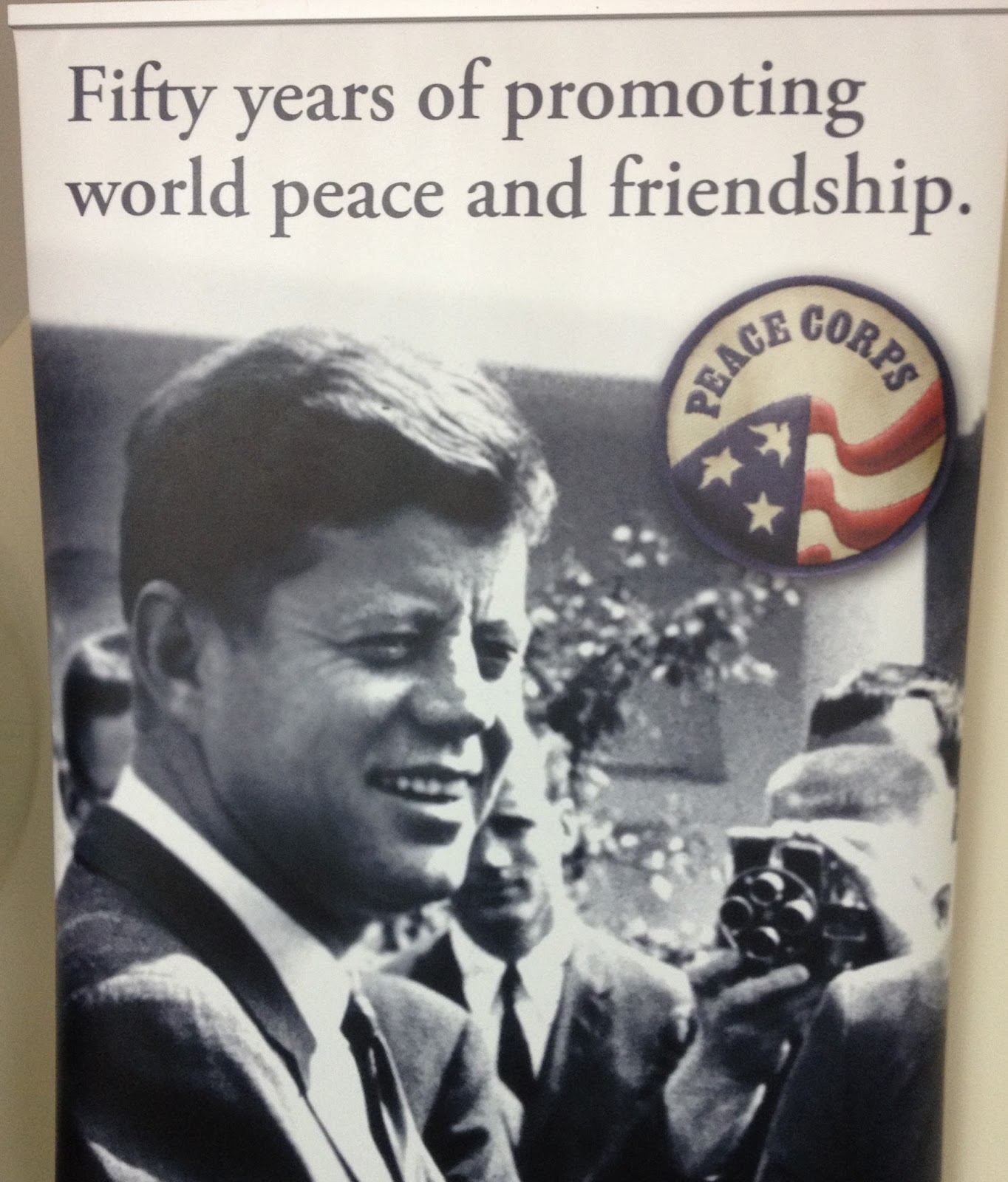
for the kind of day when I find myself uttering out loud my thanks to John F. Kennedy for ever coming up with the idea of a Peace Corps.
The commute never gets old. It's a forty minute paddle from my home in Bahia Azul down to the far end of the bay, and from there it's another hour and a half hiking, first along the swampy forest trail that connects people to the fincas where they grow their food...
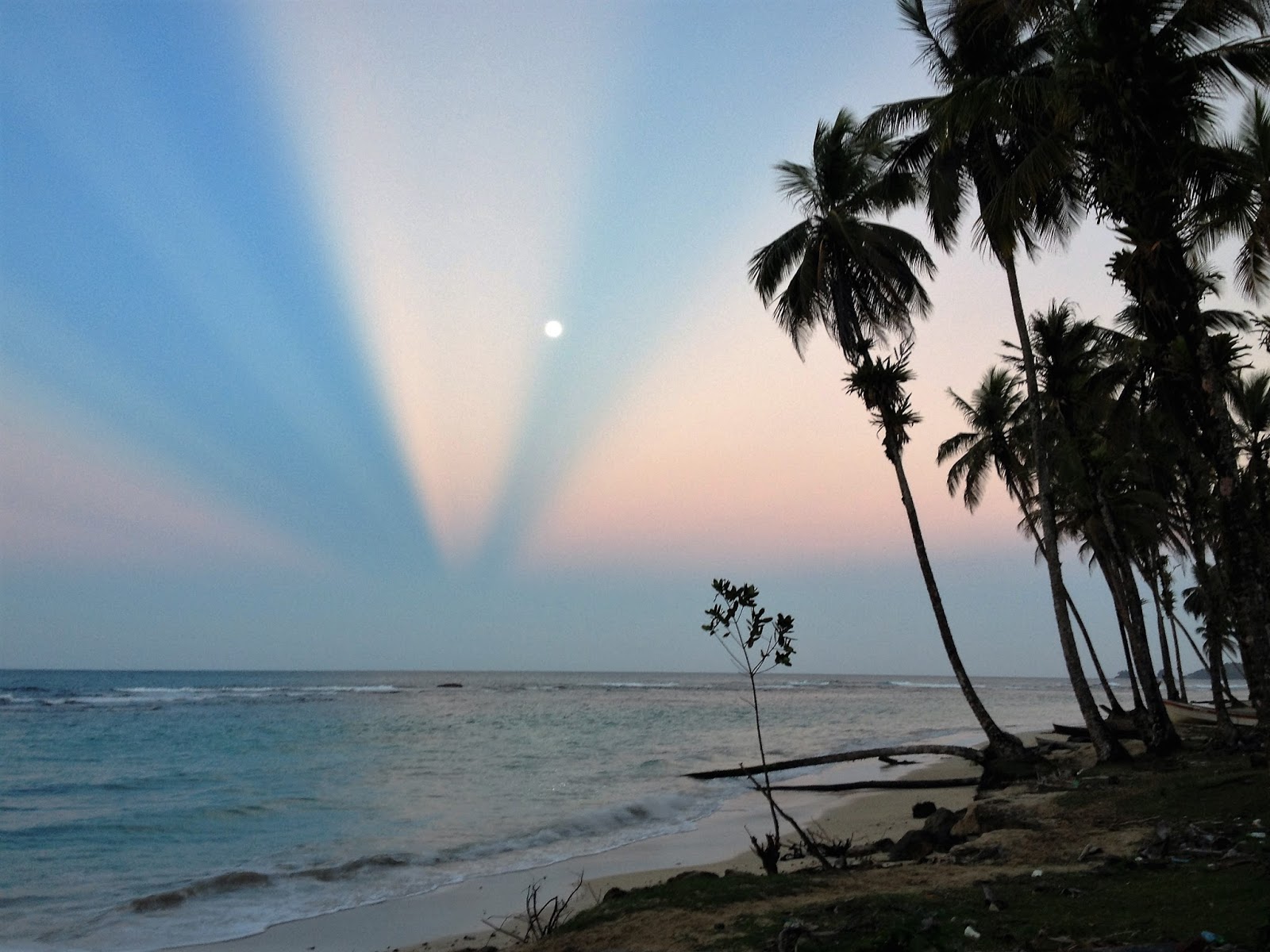
... and then out on to the spectacular beach that they share only with a few seemingly indifferent cows.
The
people in Cayo Paloma always seem glad to see me. They have an aging,
gravity-flow aqueduct that pipes water down from a spring in the
hills above their town, but they've been suffering water shortages for a couple of years now, ever since their leaky water tank deteriorated beyond repair and had to be abandoned.
So when the community came together around the idea of building a new tank I was excited, though not without misgivings when I thought about the myriad challenges
of launching a big project in the waning months of my Peace
Corps stint, especially so far from my home base. But something
told me we ought to go for it, and I'm so glad we did. I couldn't be happier
with how things turned out.
We
secured funding thanks to Waterlines, an
NGO that has generously sponsored many potable water projects here in
Panama and around the world. A big dugout cayuco was arranged to make the
thirty mile trip in to the port town of Chiriqui Grande to buy cement and other
materials.
The community organized work days to demolish the old cement block tank and to start gathering and hauling the hundred sacks of sand we
would use to make the mortar for the new ferrocement tank.
Peligro, the local water committee president, proved a good organizer of his work force and I was fortunate enough to team up again with my fellow volunteer and good friend Eta, who brought not only his know-how and masonry skills to the project, but just as importantly, his never-failing ebullience and gift for keeping the the work crew animated.
Peligro and Eta
New nick names were assigned all around, teasing jokes were told and retold and the sounds of bawdy improvised songs and laughter filled the air all through the two weeks it took to get the tank built.
Every morning ladies served up fry bread and sweet coffee at the casa comunal as the work crew of anywhere from eight to eighteen men and youths would turn up, brimming with smiles and ready to work.
I'm planning to post more of the construction details for volunteers who are planning similar tanks, but for now I'll just share a few pictures that give an overview of this 3,500 gallon ferrocement tank. We started with a steel armature made by standing up a cylinder of weld mesh about six and half feet tall and nine feet across, right on the foundation of the old tank.
We wrapped the weld mesh cylinder with two layers of chicken wire and then wrapped it all with a tight spiral of 16 gauge wire.
With this armature ready, plastic tarps were draped around the outside and wrapped on tightly with a spiral of twine.
The tarp made a firm backing for us to go inside and apply two coats of a rich (2:1) sand-cement mortar.
The tarps were then removed and two more coats of mortar were plastered on from the outside, bringing the wall to its full thickness of about two inches.
With the walls finished, we poured the floor and then created the domed roof framework using quarter inch rebar in a spider web pattern of spokes and hoops.
Layers of chicken wire were stretched over the top
...and triangular panels of quarter inch hardware cloth tied on to the bottom of the roof frame.
That made it possible to plaster the roof without needing to build any sort of decking underneath.
We added a telescoped access hatch and built a permanent ladder inside the tank to make future maintenance siimple.
With the plastering finished, we left the tank to cure under plastic for a few weeks, with
Peligro going up to check on things and splash water on it every day
or so.
We returned to connect the plumbing to the pipeline, make
a few refining plaster touches and a final cleaning before filling
the tank and sending the first tankful of water down through the
pipeline to the community. The pressure was tremendous—enough to reveal
some weak links in the pipes down in town, but all that didn't dampen anyone's enthusiasm. The
leaking pipes were patched and a gathering was convened for the official inauguraciónof
the new tank.
Coconut was grated for preparing the delicious stewed fish
rondón, along with a big pot of a favorite tuber, tödogwö.
Eta
and I each gave a little speech, congratulating everyone on their
efforts and encouraging them to carry on in the same spirit to keep
the system working. Then the floor was opened and one by one people
stood up to express their pride and satisfaction with the project, and their gratitude. The
warm offerings of “gracias” were amplified and multiplied to “mil
gracias,” -- a thousand thank yous -- and for me at least, there there was no doubt at all that the words were heartfelt.
The walk toward home that day was definitely another one of those moments.